Last updated on June 20, 2026·4 min read
Does alcohol raise or lower blood sugar?
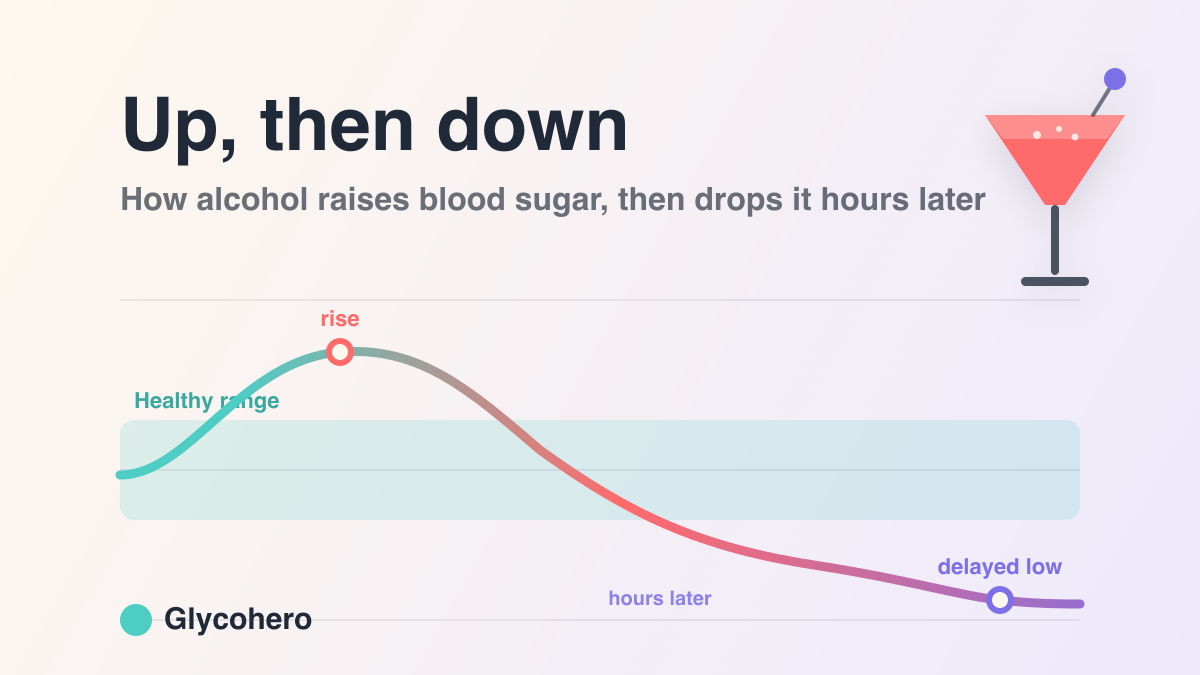
Alcohol is one of the most confusing things you can do to your blood sugar, because it pushes in two directions. Drink a sugary cocktail and your blood sugar climbs. A few hours later, the same drink can send it crashing. Both are true, and understanding why is the key to drinking more safely.
Here is what alcohol actually does, in order.
The short answer
Alcohol can raise blood sugar first and lower it later. Whether you go up or down at any given moment depends on two competing forces:
- The carbs in the drink push blood sugar up. Beer, sweet cocktails, dessert wine, and sugary mixers contain fast carbohydrates that spike blood sugar soon after you drink, just like any other sugary food.
- The alcohol itself pushes blood sugar down. Your liver treats alcohol as a toxin and drops everything to clear it, which means it stops releasing the stored glucose it normally uses to keep your levels steady. With that backup supply switched off, blood sugar can fall, sometimes hours later.
So a sweet drink often produces an early rise followed by a delayed dip. A dry drink may skip the rise but still set up the later low. The delayed drop is the part most people miss, and it is the part that matters most for safety.
Why alcohol raises blood sugar
This one is simple: it is the carbohydrates, not the alcohol. A pint of regular beer, a margarita, a rum and cola, or a glass of sweet wine all carry sugar or starch that digests quickly. That carbohydrate raises blood sugar the same way a sugary food would, often within the first hour.
Pure spirits with a zero-carb mixer (soda water, for example) have almost no carbs, so they barely move blood sugar upward at all. The sweeter and carbier the drink, the bigger the early rise.
Why alcohol lowers blood sugar
This is the part that surprises people. Between meals, your liver keeps blood sugar from falling by steadily releasing stored glucose. But your liver is also the organ that breaks down alcohol, and it treats that job as the priority. While it is busy metabolizing alcohol, it pauses its glucose release.
With the liver’s safety net switched off, blood sugar can drift downward, especially if you drank on an empty stomach. For someone taking insulin or certain diabetes medications (like sulfonylureas), this can tip into outright hypoglycemia, a low that needs treating.
The delayed low: hours later, even overnight
Because the liver stays distracted for a long time after you stop drinking, the low does not always arrive while you are still out. Alcohol can suppress glucose release for roughly 12 to 24 hours, which means a dangerous low can show up:
- A few hours after your last drink
- Overnight while you are asleep
- The next morning, alongside a hangover
This delay is what makes alcohol genuinely risky for people on glucose-lowering medication. Worse, the symptoms of a low (confusion, shakiness, slurred speech, drowsiness) look a lot like being drunk or hungover, so they are easy to dismiss.
Which drinks are best and worst
If your goal is steadier blood sugar, the carb content of the drink is what changes the early spike:
- Highest spike: regular beer, sweet cocktails (margaritas, daiquiris, anything frozen), dessert and sweet wines, and any spirit mixed with juice or regular soda.
- Lower spike: dry wine, light beer, and spirits with soda water or a diet mixer.
But here is the catch: the delayed-low risk applies to every alcoholic drink, low-carb or not, because all of them occupy the liver. Choosing a dry drink lowers the early rise; it does not remove the later dip.
When to seek help
Drinking in moderation is manageable for many people, but talk to a healthcare provider if:
- You take insulin or other glucose-lowering medication and want to drink safely
- You have had a low after drinking, or have woken up shaky, sweaty, or confused
- You regularly drink and have diabetes or prediabetes
- You are unsure how alcohol interacts with your specific medications
A severe low can be a medical emergency. This article is educational and is not a substitute for medical advice, and it is not encouragement to drink.
Feel the loop through play
The push and pull between food, movement, and your blood sugar is hard to picture from a chart. Glycohero turns it into a 2D platformer: grab quality carbs, dodge the danger foods that spike you, and exercise to bring high readings back down into the healthy range. The numbers are calibrated to real-world values, so the intuition transfers to real life.
Play the first level free in your browser, or get the full game on iOS.
Reference
Frequently asked questions
- Does alcohol raise or lower blood sugar?
- Both, at different times. Sugary and carb-heavy drinks (beer, sweet cocktails, dessert wine, sugary mixers) raise blood sugar soon after you drink. But alcohol itself blocks your liver from releasing stored glucose, so a few hours later blood sugar can drop, sometimes low enough to cause hypoglycemia. The net effect depends on what you drink, how much, and whether you ate.
- How long does alcohol affect blood sugar?
- Longer than most people expect. Alcohol can keep your liver from releasing glucose for up to about 12 to 24 hours after drinking, depending on how much you had. This is why a low can show up overnight or the next morning, well after the buzz has worn off. Effects are strongest while your body is still clearing the alcohol.
- Why does alcohol lower blood sugar?
- Your liver normally drips stored glucose into your blood to keep levels steady between meals. When you drink, your liver prioritizes breaking down the alcohol and pauses that glucose release. With the liver's backup supply switched off, blood sugar can fall, especially if you drank on an empty stomach or are on insulin or certain diabetes medications.
- Does alcohol affect blood sugar the next day?
- It can. Because alcohol suppresses the liver's glucose release for many hours, blood sugar can run low overnight or the next morning, particularly after heavier drinking. A hangover can also mask the symptoms of a low, which makes next-day hypoglycemia easy to miss.
- Which alcohol is best and worst for blood sugar?
- The biggest spikes come from sugary drinks: regular beer, sweet cocktails, dessert and sweet wines, and anything with juice or soda mixers. Lower-carb options include dry wine, light beer, and spirits mixed with soda water or a diet mixer. But remember that even low-carb alcohol still suppresses the liver's glucose release, so the delayed-low risk applies to all of them.
- Can you drink alcohol if you have diabetes?
- Many people with diabetes can drink in moderation, but it takes care because alcohol can cause delayed lows, especially with insulin or sulfonylureas. The standard precautions are: never drink on an empty stomach, eat carbohydrates while drinking, check your blood sugar before bed, and be aware that hypoglycemia can be mistaken for drunkenness. Always follow your own doctor's guidance.