Last updated on June 23, 2026·6 min read
Does stress raise blood sugar?
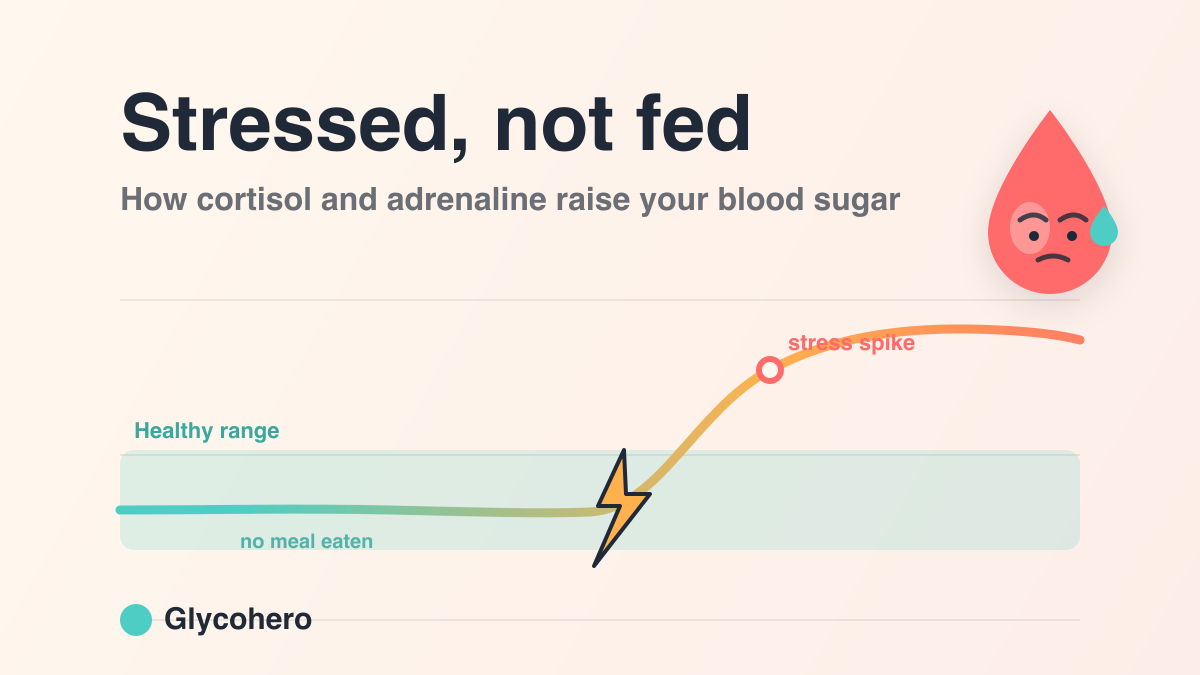
If your blood sugar reads high and you have not eaten anything unusual, stress is one of the first things to suspect. Stress and blood sugar are tightly linked, and the connection catches a lot of people off guard because it has nothing to do with food.
Here is what is happening inside your body, and what you can do about it.
The short answer
Yes, stress raises blood sugar. When you feel stressed, your body launches its fight-or-flight response and releases two hormones, cortisol and adrenaline. Their job is to get energy to your muscles fast, so they tell your liver to dump stored glucose into your bloodstream and make your cells temporarily resist insulin to keep that glucose available. The result is a rise in blood sugar, with no meal required.
It is an ancient survival system: if you were about to run from a predator, you would want fuel in your blood instantly. The problem is that a tense meeting, a traffic jam, or a wave of anxiety triggers the exact same response, and there is no sprint afterward to burn the sugar off.
How stress hormones push glucose into your blood
There are two hormones doing most of the work, on two different timelines.
- Adrenaline (fast). Within seconds of a stressful jolt, adrenaline signals your liver to release glucose and tells your cells to hold off on absorbing it. This is the sharp, short-lived spike you might see during a fright or an argument.
- Cortisol (slow and sustained). Cortisol rises more gradually and stays elevated as long as the stress continues. It keeps glucose flowing into the blood and dampens insulin’s effect for hours. Chronic stress means chronically high cortisol, which keeps blood sugar elevated long after any single stressful moment has passed.
Together they raise blood sugar and, at the same time, make it harder for insulin to bring that sugar back down. That double action is why stress highs can feel stubborn.
Acute stress vs chronic stress
The distinction matters more than the source of the stress.
- Acute stress is a one-off spike: a near-miss in traffic, public speaking, a scary email. Blood sugar rises quickly and, in a body with a healthy insulin response, settles again once the moment passes.
- Chronic stress is the bigger problem. Ongoing work pressure, money worries, poor sleep, or constant low-level anxiety keep cortisol elevated day after day. That sustained load raises your average blood sugar and, over time, contributes to insulin resistance, which is a step toward prediabetes and type 2 diabetes.
Does stress raise blood sugar without diabetes?
Yes. The stress response is universal, so cortisol and adrenaline raise blood sugar in everyone, diabetic or not. The difference is the cleanup. A healthy pancreas releases enough insulin to mop up the extra glucose fairly quickly, so a person without diabetes may never notice. In someone with diabetes or insulin resistance, that correction is slower and weaker, so stress-driven highs climb higher and linger longer.
This is also why stress can be an early, easy-to-miss signal. If you are seeing unexplained highs during stressful stretches even without a diagnosis, it is worth paying attention to.
Do not forget physical stress
Stress is not only mental. Your body reads illness, infection, injury, surgery, and pain as serious threats and floods the system with the same hormones. That is why blood sugar so often spikes when you are sick with the flu, fighting an infection, or recovering from an operation. People with diabetes follow “sick-day rules” for exactly this reason and check their levels more frequently when unwell.
What stress-driven highs feel like
A stress spike can produce the same sluggish, off feeling as any high reading: tiredness, trouble concentrating, thirst, and irritability that compounds the stress you already feel. If you want the full picture of why elevated blood sugar drains you, see why high blood sugar makes you tired and sleepy.
For context, in Glycohero we treat 3.9 to 7.8 mmol/L (70 to 140 mg/dL) as the healthy zone. Stress is one of the forces that can push you above it without a single bite of food. Not sure how your numbers translate between units? Our blood sugar converter switches any value between mmol/L and mg/dL instantly.
How to lower blood sugar caused by stress
The fix works on two fronts: calm the stress response and help your body clear the glucose.
- Breathe slowly. A few minutes of slow, deep breathing activates the rest-and-digest system and lowers adrenaline and cortisol within minutes. It is the fastest lever you have in the moment.
- Walk it off. A 10 to 15 minute walk does double duty: it lowers stress hormones and lets your muscles pull glucose straight out of the blood. Movement is the single most reliable way to bring a stress high back down.
- Protect your sleep. Short or poor sleep raises cortisol and worsens insulin resistance the next day, tightening the stress-sugar loop. Steady sleep loosens it.
- Eat steady, low-glycemic meals. You cannot control every stressor, but you can avoid stacking a blood-sugar spike on top of a stress spike. Building meals around protein, fat, and fiber, and choosing lower glycemic index foods, keeps the food side of the equation calm.
- Address the chronic sources. Acute fixes help in the moment, but lasting improvement comes from reducing the ongoing load: workload, worry, caffeine overload, and constant overstimulation all keep cortisol high.
When to see a doctor
Stress-related highs that come and go with stressful events are usually manageable with the habits above. But talk to a healthcare provider if you notice:
- Frequent unexplained high readings, with or without obvious stress
- Highs that come alongside increased thirst, frequent urination, blurred vision, or fatigue
- Blood sugar that stays elevated long after a stressful period has ended
- Stress or anxiety that feels unmanageable on its own
Persistent highs can be a sign of undiagnosed or poorly controlled diabetes, and chronic stress is treatable. This article is educational and is not a substitute for medical advice.
Feel the loop through play
The link between stress, movement, food, and your blood sugar is hard to picture from a chart. Glycohero turns it into a 2D platformer: grab quality carbs, dodge the danger foods that spike you, and exercise to bring high readings back down into the healthy range. The numbers are calibrated to real-world values, so the intuition transfers to real life.
Play the first level free in your browser, or get the full game on iOS.
Reference
Frequently asked questions
- Does stress raise blood sugar?
- Yes. When you are stressed, your body releases the hormones cortisol and adrenaline as part of the fight-or-flight response. These hormones tell your liver to release stored glucose into the blood for quick energy, and they make your cells temporarily more resistant to insulin. The result is higher blood sugar, even if you have not eaten anything.
- Can stress raise blood sugar without diabetes?
- Yes. The stress response is universal, so cortisol and adrenaline raise blood sugar in everyone. In people without diabetes, a healthy pancreas usually releases enough insulin to bring the level back down fairly quickly. In people with diabetes or insulin resistance, that correction is slower and weaker, so stress-driven highs last longer and climb higher.
- How much can stress raise blood sugar?
- It varies by person and by how intense and prolonged the stress is. Acute stress can push blood sugar up by a few mmol/L (tens of mg/dL) within minutes. Chronic, ongoing stress keeps cortisol elevated and can hold blood sugar high for hours or days, which over time contributes to insulin resistance and higher average levels.
- Does anxiety raise blood sugar?
- Anxiety triggers the same fight-or-flight hormones as physical stress, so yes, it can raise blood sugar. The body does not distinguish much between a real threat and a worried mind: both release adrenaline and cortisol, both push glucose into the blood, and both can leave your readings higher than you expect.
- Does physical stress like illness raise blood sugar?
- Yes, often sharply. Infections, injury, surgery, and pain are physical stressors that flood the body with stress hormones, which is why blood sugar frequently spikes when you are sick. This is the reason people with diabetes follow sick-day rules and check their levels more often when unwell.
- How do I lower blood sugar caused by stress?
- Address the stress and the sugar together. Slow breathing, a short walk, and stepping away from the trigger lower stress hormones within minutes. Regular exercise, enough sleep, and steady low-glycemic meals reduce the baseline cortisol load. A 10 to 15 minute walk is especially effective because it both calms you and lets your muscles pull glucose straight out of the blood.